Sydney storms can bring down big branches and whole trees in minutes. If it happens at your place, here's what to do, in order.
1. Make everyone safe
- If anyone is injured or trapped, or there is an immediate danger to life, call 000.
- Keep people and pets well away from the tree, especially from branches that are hanging, cracked or caught in other trees. They can drop without warning.
- If the tree has hit the house, stay out of damaged rooms until it's been checked.
2. Stay away from power lines
Treat every fallen or sagging wire as live. Stay at least 8 metres back and keep others away. Report it straight away to your electricity network:
- Ausgrid (Sydney, the Central Coast and Hunter): 13 13 88
- Endeavour Energy (Western Sydney, Blue Mountains and Illawarra): 131 003
Don't let anyone, including a tree crew, touch the tree until the network says the lines are safe.
3. Call the SES if you need emergency help
For storm damage where you need urgent help, like a tree through the roof, call the NSW SES on 132 500. The SES can make things safe temporarily, but they don't usually remove the tree or clean up afterwards.
4. Photograph everything for insurance
Before anything is moved, take photos and video from several angles: the tree, where it fell from, and any damage to the house, fences, cars or sheds. Then contact your insurer to start a claim. Many policies cover tree removal when a tree has damaged insured property.
5. Don't attempt it yourself
Storm-damaged trees are under unpredictable tension. A trunk or branch that's pinned or twisted can spring free when cut. This is the most dangerous kind of tree work, and it's best left to a trained crew with the right gear.
6. Call an arborist
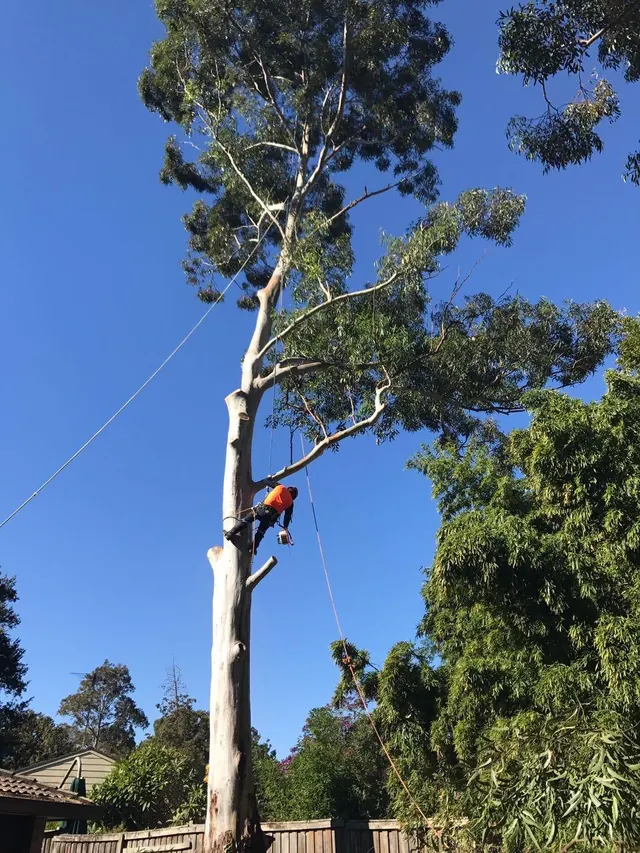
A tree service can make the site safe, remove the fallen tree or branches in controlled sections, and clean up. If the tree is still standing but damaged, an arborist can tell you whether it can be saved with pruning or needs to come down.
Signs a standing tree may be dangerous
After a storm, walk around (at a safe distance) and look for:
- A tree that has started leaning, or soil that has lifted or cracked around the base
- Cracks or splits in the trunk or where large branches join
- Large broken branches hanging in the canopy
- Exposed or snapped roots, or fungus at the base